

REFERENCE

MATERIALS

MADE STRAIGHT

AND TRUE

Fermentation & Ethanol Standards

Axion Analytical Laboratories provides analytical standards and certified reference materials supporting fermentation and ethanol analysis. Our materials help laboratories achieve accurate calibration, reliable testing, and consistent analytical performance across ethanol production workflows.

Our portfolio includes HPLC, IC, and GC reference materials used to monitor fermentation processes, measure ethanol concentration, and support analytical method validation.

We also provide wet chemistry reference materials that support traditional analytical testing methods used in fermentation monitoring and process control, helping laboratories maintain regulatory compliance and analytical accuracy.

Axion’s standards are developed with rigorous stability and homogeneity testing to ensure consistent performance and reliable analytical results for modern fermentation and ethanol production applications.
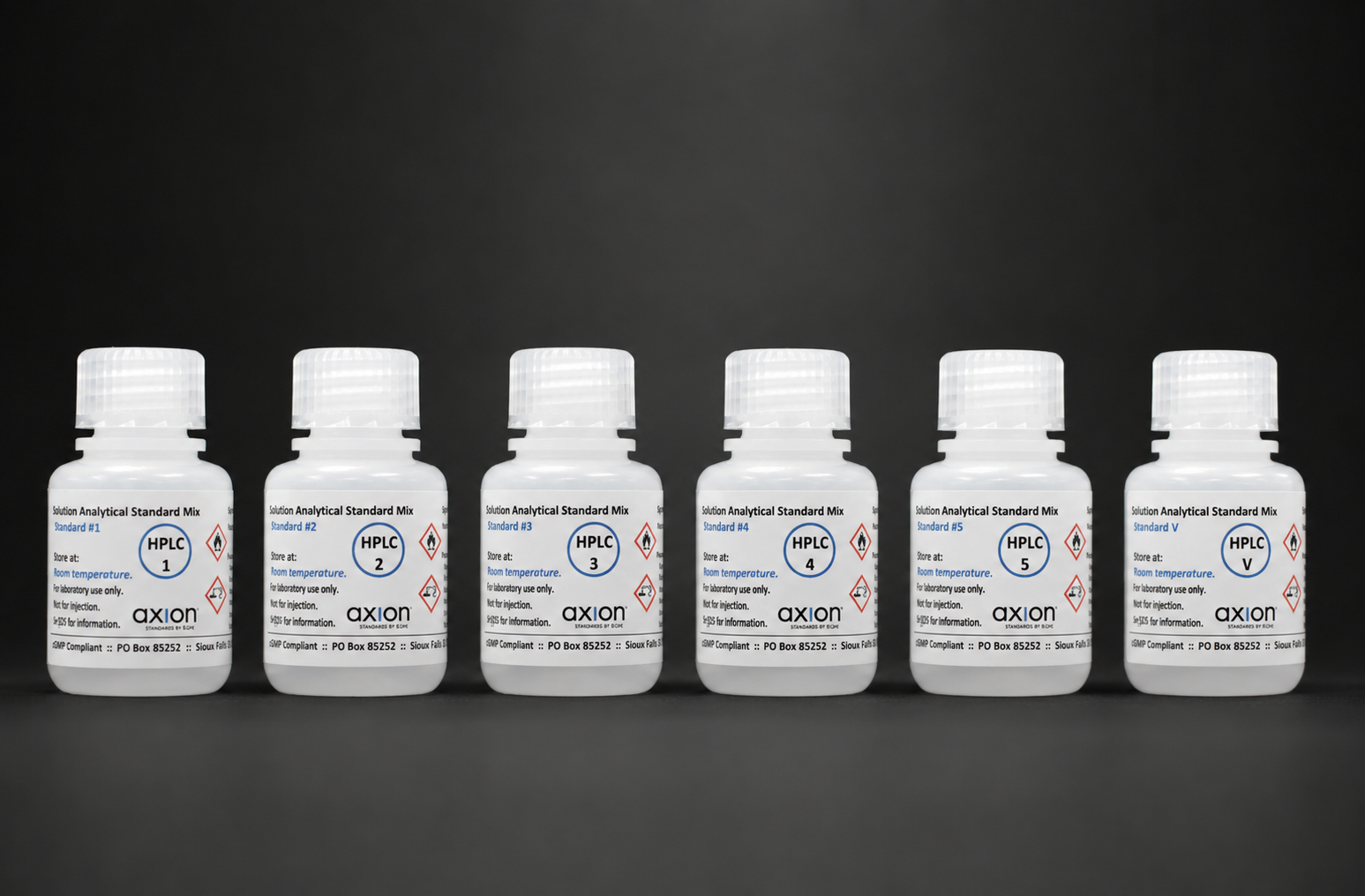
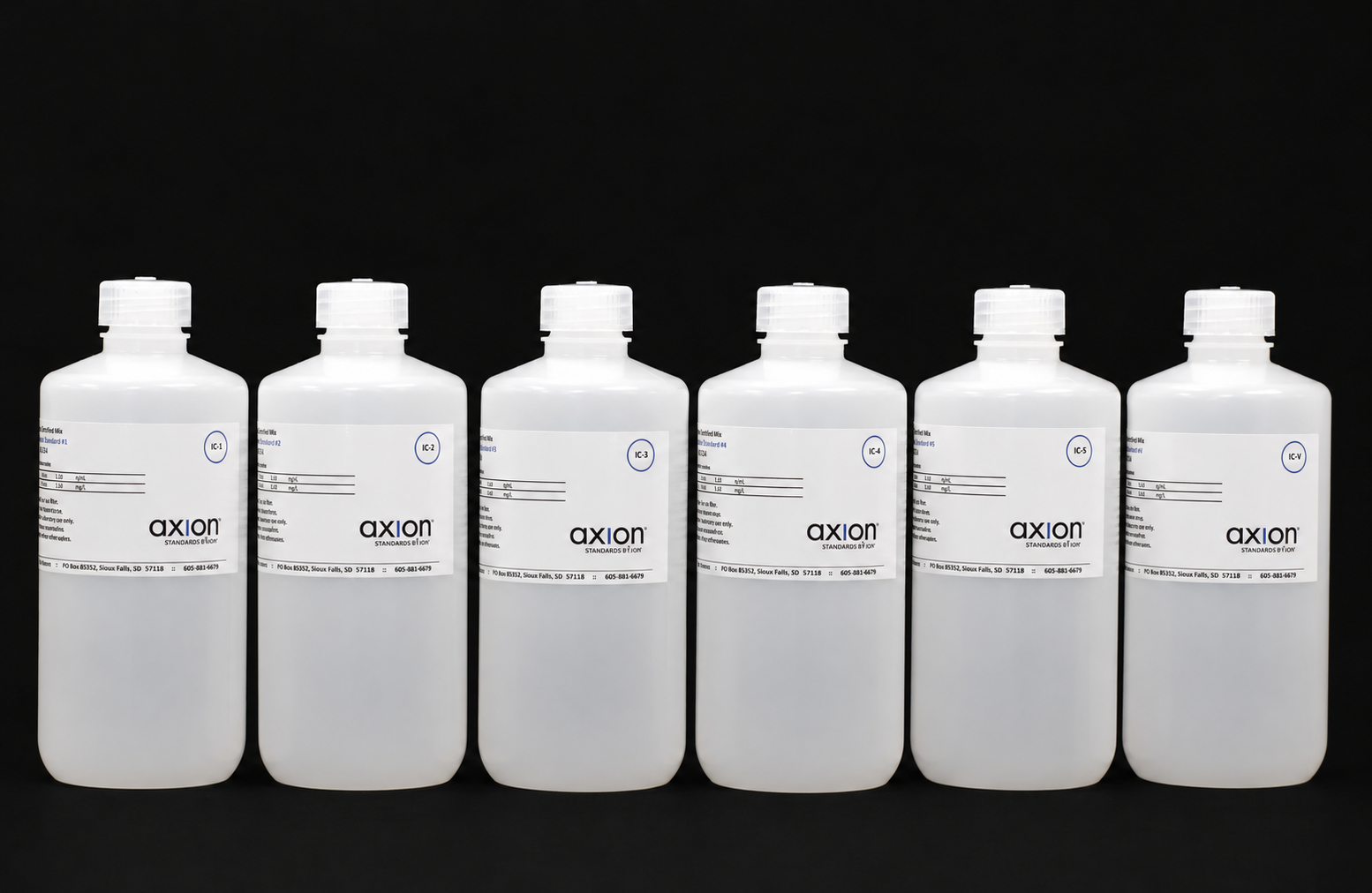
Six white bottles with labels labeled Axion filled with a liquid, arranged in a row against a dark background.

Fermentation & Ethanol FAQs

  • Analytical standards used in ethanol fermentation testing include GC, HPLC, and IC reference materials. These standards help laboratories accurately measure ethanol concentration, sugars, organic acids, and fermentation byproducts throughout the production process.

  • Reference materials help laboratories ensure accurate calibration, method validation, and consistent analytical results during ethanol production. They support reliable monitoring of fermentation performance, product quality, and regulatory compliance.

  • Common compounds measured during ethanol fermentation include ethanol, glucose, fructose, organic acids, glycerol, and fermentation byproducts. Analytical standards help laboratories quantify these compounds accurately using chromatographic techniques such as HPLC and GC.

  • Gas chromatography (GC) and high-performance liquid chromatography (HPLC) are commonly used to analyze fermentation samples. GC is often used for ethanol and volatile compounds, while HPLC is used to measure sugars, organic acids, and fermentation intermediates.

  • Reference materials help laboratories verify analytical accuracy when monitoring fermentation processes. They allow labs to validate methods, calibrate instruments, and ensure consistent measurement of compounds involved in ethanol production.